





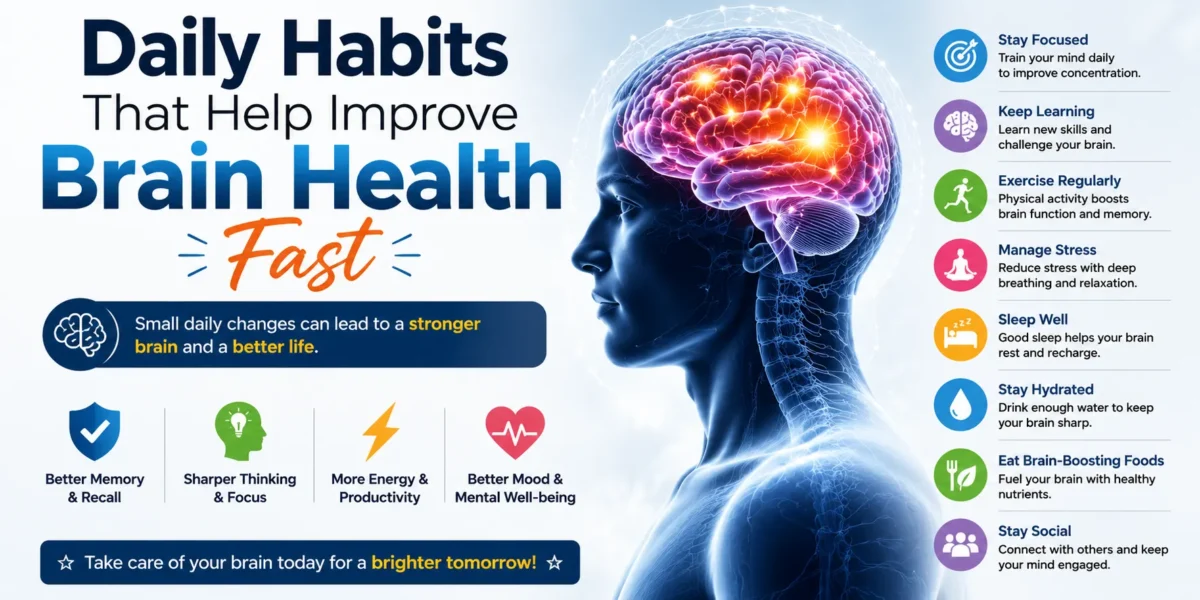
Most of us spend time caring for our physical Improve Brain Health — going to the gym, eating salads, drinking enough water. But when did you last intentionally do something just for your brain?
Here’s the truth: your brain is the most energy-hungry organ in your body, consuming nearly 20% of your total caloric intake despite being only about 2% of your body weight. It controls everything — your mood, your memories, your decisions, your creativity, and your ability to simply function every day. Yet most people don’t give it the consistent, daily attention it deserves.
The good news? You don’t need a neuroscience degree or expensive supplements to start seeing real improvements. You just need the right habits, done consistently.
Why Brain Health Matters More Than You Think
Before jumping into habits, it’s worth understanding why this matters so much.
Your brain is not a static organ. For a long time, scientists believed the adult brain couldn’t change — that you were stuck with the neurons you were born with. We now know this is completely wrong.
The brain has a remarkable quality called neuroplasticity — the ability to reorganize itself, form new neural connections, and even generate new brain cells in certain regions throughout your lifetime. This process of generating new neurons is called neurogenesis, and it primarily occurs in the hippocampus, the region most associated with learning and memory.
What does this mean for you? It means the lifestyle choices you make every single day either support or undermine this regenerative process. The habits you’ll read about below don’t just make you feel better — they literally help increase brain cells naturally, strengthen neural pathways, and keep your brain sharp for decades.
Ignoring brain health, on the other hand, accelerates cognitive decline, increases the risk of neurodegenerative diseases like Alzheimer’s, and affects your daily performance, emotional regulation, and quality of life.
The stakes are real. And the window to act is now.
Habit 1: Prioritize Quality Sleep Every Night
If you could only adopt one habit from this entire article, let it be this one.
Sleep is not downtime for your brain — it is the most active recovery process your brain undergoes every 24 hours. During deep sleep, your brain activates what researchers call the glymphatic system, a waste-clearance mechanism that literally flushes out toxic proteins, including beta-amyloid and tau — the same proteins associated with Alzheimer’s disease.
Beyond detoxification, sleep is when your brain consolidates memories, processes emotions, repairs damaged cells, and resets neural pathways for the next day. A consistent lack of sleep — even just six hours per night instead of seven or eight — has been shown to impair cognitive function, reduce decision-making ability, and accelerate brain aging.
How to improve your sleep quality:
- Stick to a consistent schedule — Go to bed and wake up at the same time every day, even on weekends. This regulates your circadian rhythm, which governs nearly every biological process in your body.
- Eliminate blue light exposure one hour before bed — Blue light from phones and laptops suppresses melatonin production. Use blue light blocking glasses or enable night mode on your devices.
- Keep your room cool and dark — The optimal sleep temperature is between 65–68°F (18–20°C). Your core body temperature naturally drops during sleep, and a cool environment supports that process.
- Avoid caffeine after 2 PM — Caffeine has a half-life of approximately five to six hours. A 3 PM coffee still has half its stimulating effect in your system at 8 PM.
Target: 7–9 hours of quality sleep per night. This is non-negotiable for a healthy brain.
Habit 2: Move Your Body to Boost Your Brain
Exercise is arguably the single most powerful tool available to boost your brain function — and it costs nothing.
When you engage in aerobic exercise (walking, jogging, swimming, cycling), your body releases a protein called Brain-Derived Neurotrophic Factor (BDNF). Scientists often call BDNF “Miracle-Gro for the brain” — and the nickname is earned. BDNF promotes the growth and survival of neurons, strengthens synaptic connections, and is one of the most reliable ways to increase brain cells naturally.
Multiple studies have shown that regular aerobic exercise:
- Increases the volume of the hippocampus (the brain’s memory center) by up to 2%
- Improves executive function, attention, and processing speed
- Reduces risk of depression and anxiety, both of which impair brain function
- Lowers the risk of dementia by up to 30–40%
You don’t need to run marathons. Even a 20–30 minute brisk walk five days a week produces measurable improvements in brain function and memory. The key is consistency over intensity, especially if you’re just getting started.
Practical tips:
- Walk after meals to combine metabolic and brain benefits
- Try resistance training 2–3 times per week — it also raises BDNF and improves cognitive function
- Incorporate movement breaks every 90 minutes if you work at a desk
- Dance — seriously. Dancing combines physical movement with rhythm, coordination, and social engagement, all of which benefit the brain simultaneously
Target: At least 150 minutes of moderate aerobic activity per week, plus 2 sessions of strength training.
Habit 3: Feed Your Brain the Right Nutrition
What you eat directly affects brain function, brain structure, and long-term cognitive health. Your brain requires specific nutrients to produce neurotransmitters, maintain cell membrane integrity, regulate inflammation, and support energy metabolism.
The Most Brain-Supportive Foods
Fatty fish (salmon, sardines, mackerel): Rich in omega-3 fatty acids, particularly DHA, which makes up approximately 60% of the fat in your brain. Low DHA is linked to cognitive decline and depression.
Blueberries: Packed with flavonoids and antioxidants that reduce oxidative stress in the brain. Research from Harvard has shown regular blueberry consumption is associated with delayed cognitive aging by up to 2.5 years.
Leafy greens (spinach, kale, broccoli): High in folate, vitamin K, lutein, and beta-carotene — nutrients linked to slower cognitive decline. A single serving per day was found to be equivalent to 11 years of younger brain aging in one major study.
Nuts and seeds (especially walnuts): Walnuts are shaped like a brain for a reason — they’re loaded with DHA, polyphenols, and vitamin E, all protective for brain tissue.
Dark chocolate (70%+ cocoa): Contains flavanols that increase blood flow to the brain, improve memory, and elevate mood through serotonin and endorphin release.
Turmeric: Curcumin, the active compound in turmeric, crosses the blood-brain barrier and has shown anti-inflammatory and antioxidant effects. Some research suggests it may help clear amyloid plaques associated with Alzheimer’s.
Eggs: A top source of choline, which the body uses to produce acetylcholine — a neurotransmitter essential for mood regulation, memory, and muscle control.
What to Avoid
- Refined sugar and ultra-processed foods spike blood glucose and trigger neuroinflammation
- Trans fats are linked to impaired memory and brain shrinkage
- Excessive alcohol kills neurons and reduces overall brain volume over time
- Highly processed seed oils promote systemic inflammation, which has cascading effects on brain health
Target: Follow a predominantly Mediterranean or MIND diet pattern — heavy on plants, fish, olive oil, legumes, and whole grains.
Habit 4: Hydrate Consistently Throughout the Day
This one is underrated but critical.
Your brain is approximately 75% water. Even mild dehydration — as little as 1–2% of your body weight — measurably impairs concentration, short-term memory, alertness, and mood. In one study, individuals who were mildly dehydrated performed significantly worse on tasks requiring attention and psychomotor speed.
Chronic low-grade dehydration is surprisingly common and many people don’t realize they’re in that state. The result is a brain that’s constantly running at less than full capacity.
Tips for staying hydrated:
- Start your morning with a large glass of water before coffee or food
- Carry a water bottle and set a reminder every hour to take a few sips
- Eat water-rich foods — cucumber, watermelon, oranges, and soups contribute meaningfully
- Monitor your urine — it should be pale yellow, not dark
Target: Approximately 8–10 glasses (2–2.5 liters) of water per day, more if you’re physically active or in a hot climate.
Habit 5: Practice Mindfulness and Meditation

Chronic stress is one of the most damaging forces on brain health. Prolonged elevated cortisol — the body’s primary stress hormone — physically shrinks the prefrontal cortex (your rational thinking center) and the hippocampus (memory), while enlarging the amygdala (fear and emotional reactivity).
In practical terms: chronic stress makes you forgetful, impulsive, emotionally reactive, and less mentally sharp.
Mindfulness meditation is one of the most evidence-backed interventions for reversing these effects. A landmark Harvard study found that after just eight weeks of consistent meditation practice, participants showed measurable increases in gray matter density in areas of the brain associated with learning, memory, emotional regulation, and perspective-taking.
You don’t need to meditate for an hour a day to see results. Research shows even 10–15 minutes daily of focused breathing or body scan meditation is enough to:
- Lower cortisol levels
- Improve working memory and attention span
- Increase gray matter volume
- Reduce symptoms of anxiety and depression
Getting started:
- Use apps like Headspace, Calm, or Insight Timer if you’re new to meditation
- Start with just 5 minutes in the morning — focus only on your breath
- Practice body scans before bed to reduce nighttime anxiety
- Even mindful walks (paying full attention to your surroundings while walking) count
Target: 10–20 minutes of mindfulness or meditation daily.
Habit 6: Engage in Continuous Learning and Mental Stimulation
Your brain follows a simple biological principle: use it or lose it.
Neural pathways that are used regularly are strengthened and preserved. Those that are neglected gradually weaken and get pruned away. This is why people who remain intellectually active throughout their lives consistently show lower rates of cognitive decline and dementia even when postmortem brain analysis reveals significant Alzheimer’s pathology.
The concept of cognitive reserve — essentially a buffer of neural complexity built through learning — can literally delay the clinical onset of dementia by years.
Ways to stimulate your brain daily:
- Learn something new — A language, a musical instrument, a skill. New learning forces the brain to build entirely new neural networks, which is one of the most powerful ways to increase brain power.
- Read books — Reading activates multiple regions of the brain simultaneously and builds vocabulary, comprehension, and imagination.
- Do puzzles and games — Crosswords, sudoku, chess, and strategy games all challenge working memory and executive function.
- Take a different route home — Novelty forces the brain to engage. Doing things differently (writing with your non-dominant hand, navigating without GPS) activates new neural pathways.
- Have deep conversations — Social engagement and intellectual discourse activate the prefrontal cortex in ways passive entertainment does not.
Target: At least 30 minutes of deliberate mental engagement (beyond passive entertainment) per day.
Habit 7: Manage and Reduce Alcohol Consumption
This needs to be said plainly: there is no safe level of alcohol consumption for brain health.
While moderate alcohol has been historically associated with some cardiovascular benefit, the neuroscience consensus has shifted significantly. The World Health Organization and numerous researchers now affirm that any alcohol consumption increases brain risk.
Alcohol is a neurotoxin. Regular consumption shrinks the brain’s white matter (responsible for communication between regions), disrupts sleep architecture (particularly REM sleep, critical for memory consolidation), depletes B vitamins essential for nerve function, and accelerates hippocampal volume loss.
If reducing or eliminating alcohol is within your capacity, your brain will thank you measurably — improved sleep quality, better memory retention, sharper morning cognition, and improved emotional regulation are among the most commonly reported benefits.
Habit 8: Build and Maintain Strong Social Connections
Loneliness is as damaging to brain health as smoking 15 cigarettes a day — this was not a metaphor. Research from Brigham Young University analyzing data from over 3 million people found social isolation to be associated with a 26–29% increased risk of premature mortality and significant cognitive decline.
Strong social relationships challenge the brain, provide emotional regulation, reduce chronic stress, and give the brain a sense of purpose — all of which directly support long-term brain function and improve memory.
Prioritize:
- Regular face-to-face interaction with friends and family
- Joining groups, clubs, or classes built around shared interests
- Volunteering — it combines purpose, social engagement, and often physical activity
- Meaningful conversations over passive digital interactions
Habit 9: Get Sunlight and Manage Your Circadian Biology
Morning sunlight exposure within the first 30–60 minutes of waking has profound effects on brain chemistry. Natural light triggers serotonin production (the brain’s mood-stabilizing neurotransmitter), sets your cortisol rhythm correctly (so you feel alert in the morning and tired at night), and regulates melatonin timing for better sleep that night.
Vitamin D, synthesized through sun exposure, is also critical for brain function. Low vitamin D is strongly associated with cognitive decline, depression, and increased Alzheimer’s risk. In India and many other regions with high UV intensity, people ironically become vitamin D deficient due to indoor sedentary lifestyles and sun avoidance.
Target: 10–20 minutes of direct morning sunlight (without sunglasses) within an hour of waking, daily.
Habit 10: Breathe Deeply and Optimize Oxygen Delivery
The brain needs a constant, abundant supply of oxygen to function optimally. Yet chronic shallow breathing — which most sedentary adults engage in — delivers significantly less oxygen per breath than deep diaphragmatic breathing.
Practices like deep belly breathing, pranayama (yogic breathing), and box breathing activate the parasympathetic nervous system, lower cortisol, increase oxygen saturation, improve cerebral blood flow, and have been shown to enhance focus and cognitive clarity within minutes.
A simple practice: 5 minutes of box breathing (inhale for 4 counts, hold for 4, exhale for 4, hold for 4) before any cognitively demanding task.
A Sample Daily Brain-Healthy Routine
Here’s how these habits can realistically fit into a single day:
Morning (6:30 AM – 8:30 AM)
- Wake at a consistent time
- Drink a large glass of water
- 10–20 minutes of morning sunlight exposure
- 10 minutes of meditation or deep breathing
- Protein and omega-3 rich breakfast (eggs, walnuts, berries)
Midday (12:00 PM – 1:30 PM)
- 30-minute walk after lunch
- Read or engage in learning for 20–30 minutes
- Stay hydrated throughout
Afternoon (3:00 PM – 5:00 PM)
- Movement break if desk-bound
- No caffeine after 2 PM
Evening (7:00 PM – 10:00 PM)
- Social connection — conversation, family time
- Limit screens after 9 PM
- Light stretching or yoga
- 7–9 hours of sleep beginning by 10:30 PM
Frequently Asked Questions (FAQ)
Q1: How quickly can I see results from these habits?
Some effects are nearly immediate — better hydration, a 20-minute walk, or one good night’s sleep can produce noticeable improvements in focus and mood within 24 hours. Structural brain changes (increased hippocampal volume, higher BDNF levels, improved memory) typically require 4–8 weeks of consistent practice. Think of it as a compound investment: small daily deposits that pay major dividends over time.
Q2: Can you really increase brain cells naturally?
Yes. Neurogenesis — the birth of new neurons — occurs throughout adulthood, primarily in the hippocampus. Exercise, quality sleep, caloric restriction, omega-3 fatty acids, and cognitive stimulation all support this process. Chronic stress, alcohol, sleep deprivation, and poor diet suppress it.
Q3: What is the single most effective habit to increase brain power?
Sleep is the single most impactful habit. Without adequate, quality sleep, nearly every other intervention loses effectiveness. Exercise comes in a very close second due to its BDNF-raising effects.
Q4: Are brain supplements worth taking?
Some supplements have genuine evidence behind them — omega-3 DHA/EPA, magnesium glycinate, vitamin D3, lion’s mane mushroom, and creatine have the strongest research support for brain function. However, supplements should augment a healthy lifestyle, not replace it. Always consult a healthcare provider before beginning supplementation.
Q5: How does chronic stress damage the brain?
Chronic stress elevates cortisol over extended periods. Prolonged cortisol exposure damages and kills neurons in the hippocampus, reduces neurogenesis, impairs long-term potentiation (the mechanism behind memory formation), and promotes neuroinflammation — all leading to measurable declines in memory, focus, and emotional regulation.
Q6: At what age should I start caring about brain health?
Immediately, regardless of your current age. Brain health is a lifelong process that benefits from early investment. However, research shows significant neuroplasticity even into old age — it is never too late to begin. Adults in their 60s, 70s, and beyond show meaningful improvements from exercise, diet changes, and cognitive engagement.
Q7: Does diet really affect brain function that directly?
Absolutely. The gut-brain axis is a bidirectional communication network connecting your digestive system and your brain via the vagus nerve and a complex network of neurotransmitter pathways. Approximately 90–95% of serotonin is produced in the gut. What you eat shapes your microbiome, which directly influences brain chemistry, inflammation levels, and mood.
Key Takeaways
- Sleep is the foundation of all brain health — prioritize 7–9 hours consistently
- Aerobic exercise raises BDNF and is the most reliable way to boost your brain and increase brain cells naturally
- A diet rich in omega-3s, antioxidants, and whole foods directly supports healthy brain function
- Hydration, sunlight, and deep breathing are low-effort habits with high cognitive payoff
- Chronic stress is a brain killer — mindfulness and social connection are powerful antidotes
- Continuous learning and novelty maintain cognitive reserve and improve memory
- These habits work synergistically — the more you stack, the greater the benefit
References and Sources
- Walker, M. (2017). Why We Sleep: Unlocking the Power of Sleep and Dreams. Scribner. https://www.sleepfoundation.org
- Ratey, J. J. (2008). Spark: The Revolutionary New Science of Exercise and the Brain. Little, Brown and Company.
- Erickson, K. I., et al. (2011). Exercise training increases size of hippocampus and improves memory. PNAS. https://www.pnas.org/doi/10.1073/pnas.1015950108
- Harvard Health Publishing. (2021). Foods linked to better brainpower. https://www.health.harvard.edu/mind-and-mood/foods-linked-to-better-brainpower
- Hölzel, B. K., et al. (2011). Mindfulness practice leads to increases in regional brain gray matter density. Psychiatry Research. https://www.ncbi.nlm.nih.gov/pmc/articles/PMC3004979/
- Morris, M. C., et al. (2015). MIND diet associated with reduced incidence of Alzheimer’s disease. Alzheimer’s & Dementia. https://www.alzheimersanddementia.com
- Holt-Lunstad, J., et al. (2015). Loneliness and social isolation as risk factors for mortality. Perspectives on Psychological Science. https://pubmed.ncbi.nlm.nih.gov/25910392/
- World Health Organization. (2023). Alcohol and Health. https://www.who.int/news-room/fact-sheets/detail/alcohol
- National Institute on Aging. (2024). Cognitive Health and Older Adults. https://www.nia.nih.gov/health/brain-health
- Gomez-Pinilla, F. (2008). Brain foods: the effects of nutrients on brain function. Nature Reviews Neuroscience. https://www.nature.com/articles/nrn2421
- Cleveland Clinic. (2023). How to Improve Brain Health. https://health.clevelandclinic.org
- Harvard Medical School. (2023). The gut-brain connection. https://www.health.harvard.edu/diseases-and-conditions/the-gut-brain-connection
Disclaimer
The information provided in this article is intended for general educational and informational purposes only. It does not constitute medical advice, diagnosis, or treatment. Always consult a qualified healthcare professional before making significant changes to your diet, exercise routine, supplement regimen, or any other aspect of your health, particularly if you have a pre-existing medical condition or are taking medications. Results from lifestyle changes vary between individuals. The author and publisher are not responsible for any adverse effects or consequences resulting from the use of suggestions, information, or procedures described in this content.